About
A council built on heritage, oriented to the future.
Our Mission
The EMC Council grew out of over a decade of bilateral dialogue and institutional encounters between Europe and Asia — work that began in Rome in 2012 and has since broadened in geography, scope, and ambition.
For over a decade the EMC Council has worked at the intersection of civilization, prosperity and institutional dialogue — providing a neutral platform for the dialogue that shapes our shared regions.
We are independent and nonprofit. Our members include national and regional governments, chambers of commerce, universities, and leading enterprises across two continents.
Our pillars — Institutions, Civilization, and Prosperity — reflect a conviction that lasting cooperation rests on more than economics alone.
Our Identity
The mark, the colour, the voice — and the geography they carry.
The Eurasia–Mediterranean Cooperation Council exists at a geometry no single tradition has owned: the latitude where the Roman cardo meets the Silk Road, where the rhetoric of the polis meets the protocol of empire. Its mark — a three-arch portico bearing a Lombard finial — carries a Roman arch, a Gothic lancet, and an Eastern ogee in equal load upon one golden stylobate.
Il Consiglio si colloca in una geometria che nessuna tradizione, da sola, ha mai posseduto: la latitudine in cui il cardo romano incontra la Via della Seta, e la retorica della polis incontra il protocollo dell'impero.
Our Geographic Imagination
Two maps · One horizon
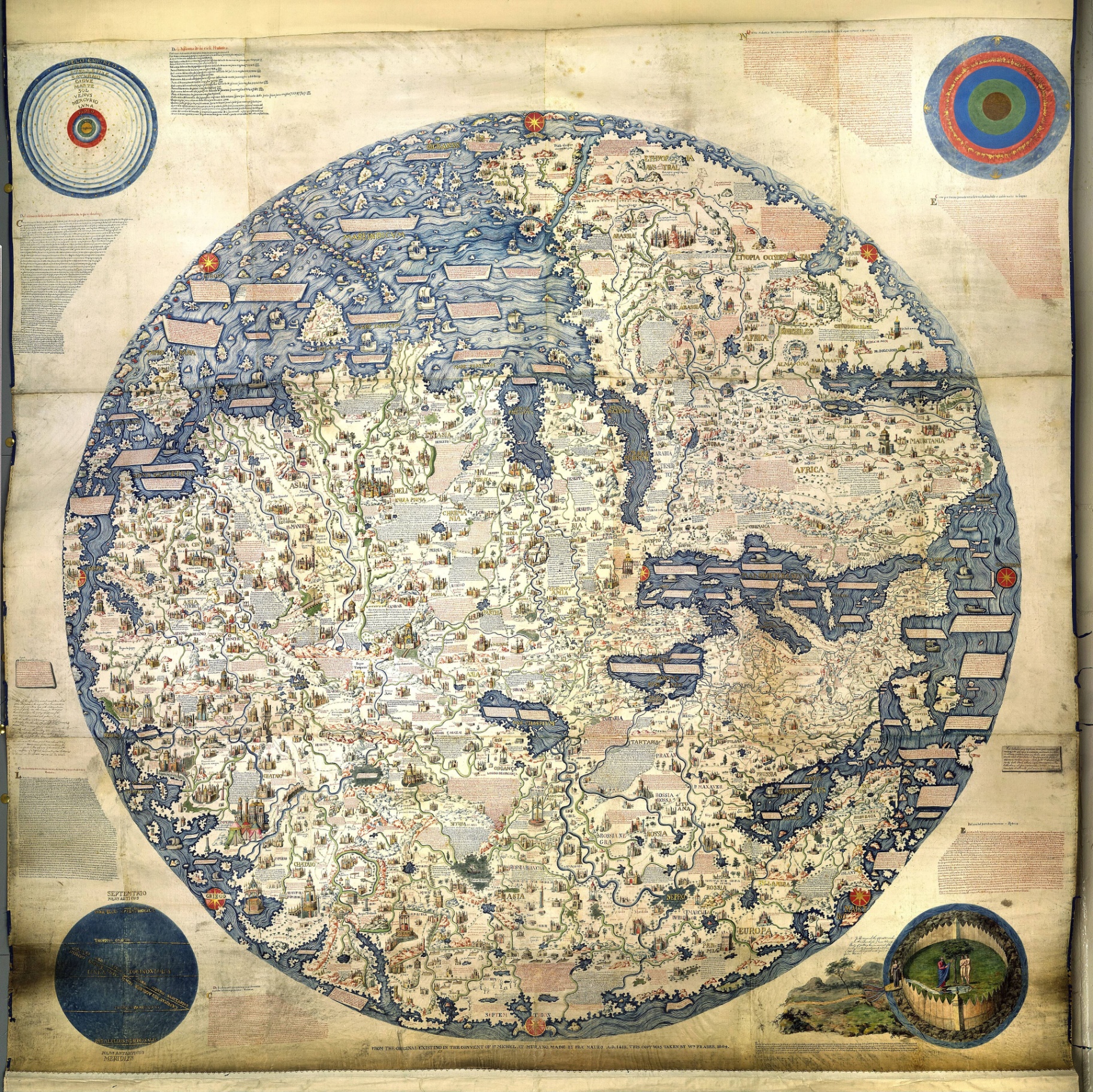
Fra Mauro, Venice, c. 1450. South is at the top. No civilization occupies the centre.
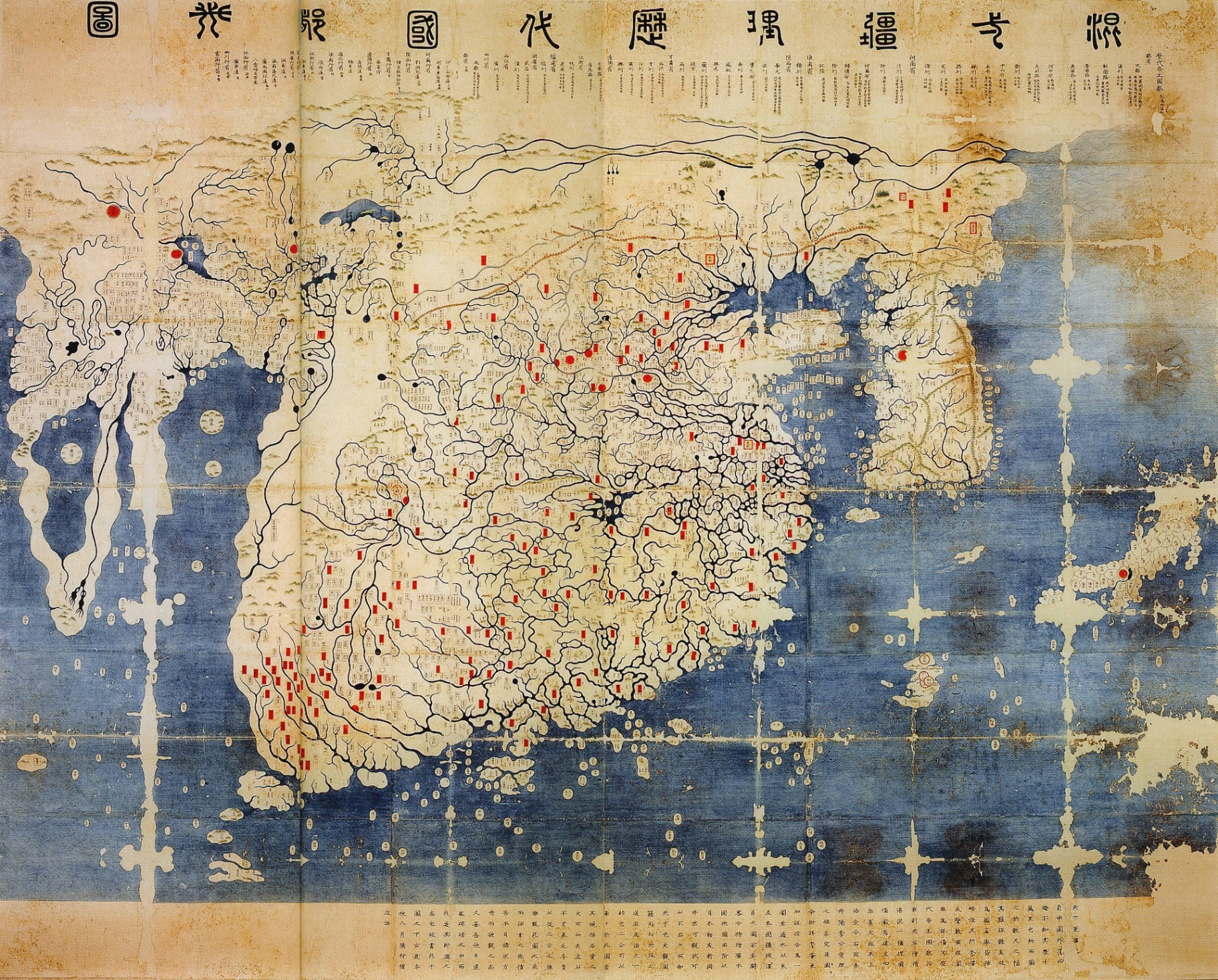
Pei Xiu's cartographic principles, 3rd century AD. Rational, systematic — and without mythological embellishment.
Two traditions mapping the same world from different standpoints. This is where the EMC Council begins.